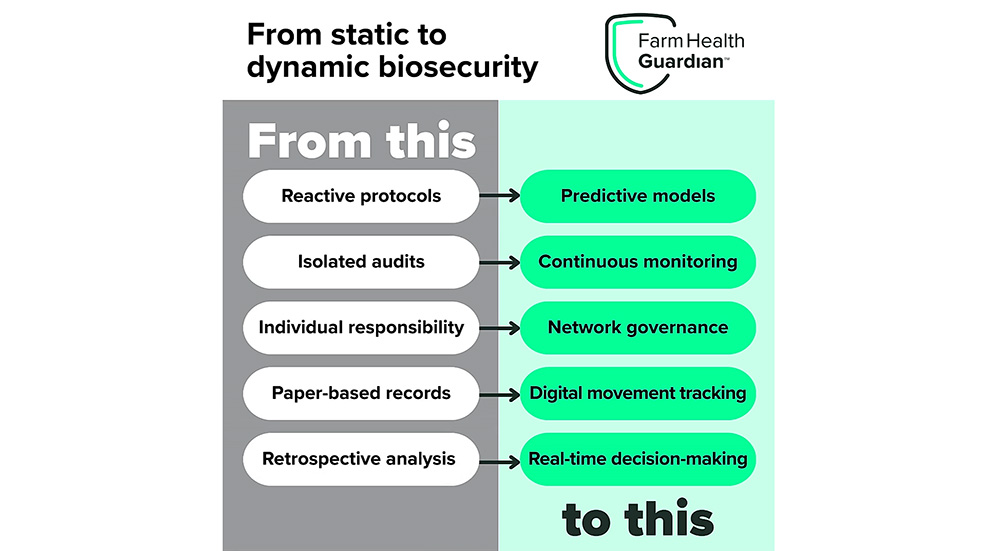
Biosecurity isn’t just about protocols – it’s about everyday practice. As farms grow more interconnected and disease risks move faster than ever, biosecurity systems must evolve beyond checklists and logbooks.
Jean-Pierre Vaillancourt, DMV believes biosecurity is not what is written – it is what is actually done. In other words, biosecurity should be more than a set of rules to follow and check off, it must be a dynamic process of continuous monitoring, data analysis, and real-time decision making.
“Biosecurity is not what is written – it is what is actually done,”
– Jean-Pierre Vaillancourt, DVM
Real-time data changes the culture
When a disease threat is suspected, animal health teams need clear answers, and quickly. Static systems simply can’t deliver the timely movement data needed to track infections or anticipate risks across a farm or regional network.
Real-time tracking, however, can be applied as a valuable biosecurity tool that allows movements to be captured automatically, as they happen.
According to a report, Controlling pathogen movements throughout the entire value chain: Toward a dynamic, collective biosecurity strategy in European swine systems, digital biosecurity systems must do more than collect data to be effective. They need to:
- React quickly when risks emerge
- Store critical information such as farm health status and vehicle sanitation history
- Send immediate alerts when biosecurity rules are breached or health conditions change
When this information is available in real-time, disease surveillance becomes targeted and meaningful. Access to real-time movement data significantly reduces delays associated with manual record collection, enabling data-driven decision making, traceback investigations to begin much sooner, improving the chances of early containment and reducing the impact.
Compliance improves when feedback is immediate
Digital monitoring doesn’t just help during outbreaks – it changes everyday behaviour. When people receive immediate feedback about their actions, awareness increases and compliance improves. Real-time alerts and clear records help animal health teams understand how their decisions affect risk, not just for their own farm, but for the wider network.
Digital monitoring can transform biosecurity culture from reactive to proactive
According to Diazi et al., digital monitoring and real-time notifications greatly improve compliance by making personnel more aware of their actions. This suggests that used effectively and responsibly, digital biosecurity can be a very powerful tool.
Systems that work
At Farm Health Guardian, we believe biosecurity should be more than a set of rules to check off. It must become a sector-wide, dynamic risk management framework that reflects the reality of modern networks and supports early, data-driven decisive action when threats arise.
Farm Health Guardian captures movement events as they happen – 24/7, in real time. Trucks and trailers are tracked, farm entry and exit events are recorded, and health statuses are automatically updated. This system is much more than digitizing a paper logbook and standard biosecurity protocols – it’s about creating real-time, digitally recorded data that supports immediate action and deeper insights to help transfer data into actionable decisions.
Make the change
Shifting from checklists to digital systems isn’t just a technical upgrade – it’s a cultural transformation. Digital platforms like Farm Health Guardian enable this shift – by providing the tools for industry leaders to strengthen compliance, accelerate outbreak responses, and build proactive resilience.
For more information visit farmhealthguardian.com.
iDiaz I et al: Digital biosecurity on farms and accelerating learning: Pig 333 article 2021
